PM welcomes Prime Minister Rajoy
Spanish Prime Minister Rajoy welcomed to Downing Street, accompanies PM on Crossrail visit.
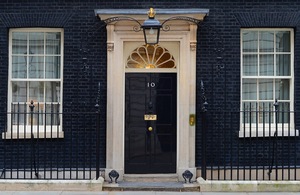
The Prime Minister has welcomed Spanish Prime Minister Mariano Rajoy to Downing Street today during Prime Minister Rajoy’s first visit to the UK since taking office in December.
Discussions focused on domestic reforms underway to drive economic growth, the trade and investment relationship and bilateral cooperation within the EU.
Following the Prime Ministers’ meeting they visited Crossrail where Spanish company Ferrovial is working as part of the consortia and will create 1,500 jobs.
A transcript of their joint press conference follows:
Prime Minister
Good afternoon and welcome everybody. It is a huge pleasure and a privilege to welcome the Spanish Prime Minister to Number 10 Downing Street. We have had some excellent discussions and we are going to be having more discussions this afternoon as we go and visit one of the largest construction projects in the whole of Europe, which is the Crossrail project.
We discussed three things really. First of all, our bilateral relationship. There is an incredibly strong relationship between Britain and Spain, and now with two centre-right Prime Ministers I think we can make that relationship even stronger. We have very strong economic ties between our countries, huge UK investment into Spain and massive Spanish investment into the UK. We will be seeing one example of that, Ferrovial, a big contributor to the Crossrail project, this afternoon.
We had a long discussion about the European situation, the Eurozone situation, but above all the need to get growth throughout Europe. I am delighted that the Spanish Prime Minister has signed and co-authored the growth letter that we we’ll be sending to the European Commission before the next European Union Summit. It is a letter that demands action on completing the single market in services, completing the single market in energy, in digital, making sure that we properly promote innovation, making sure that Europe is deregulating and helping growth, and making sure that we are signing trade deals with the fastest growing parts of the world. It is a fully-formed, fully-worked out growth agenda, that has the backing of Prime Ministers right across the European Union and it is excellent that Spain and Britain are co-operating so well on this issue.
Finally, the third thing we discussed was some of the key global issues, and I paid tribute to the fact that the Spanish have joined the European effort to put in place an oil embargo on Iran. I think this is a really positive step forward to show to the Iranian government that they must change course and abandon their plans for nuclear weapons and that we are committed to taking this very tough action in terms of sanctions, and also that we are working together on sanctions against the Syrian regime. There have been round after round of sanctions, but we are determined to go further to make sure that we see a Syria that has a future free of Assad, who has been butchering and killing his people and continues to do so as we stand here today.
Very good talks, a very warm welcome for you to be here today, and I hope the start of a long and fruitful friendship between our two governments. Thank you.
Spanish Prime Minister(Via Interpreter)
Good afternoon to you all. Thank you very much for your kind words, Prime Minister. Thank you for your warm welcome. As you know, both Spain and the UK are united by ties that make us allies, friends of the first order. We have splendid bilateral relations. As the Prime Minister has said, they will be even better if possible now, and in the future. We have economic and financial relations of every sort and we share an intent to propose similar values: democracy, respect for human rights, and to work in order to improve the well being and wealth of our citizens in the United Kingdom and in Spain.
I think that the Prime Minister has also explained the contents of our meeting. I cannot add much more to what he has said already, but I may want to stress some of the subjects he has referred to.
The most important part of our talk has been about the economy and about what is happening at present in the European Union, and also, of course, about the proposal that some Prime Ministers and heads of government of different European countries have signed. In this regard, I have the following to say. Spain, as very many other countries, has a major objective. Ours is very clear and known to all: to promote economic growth and create jobs, which is tantamount to generating wealth and well being. We need to act on four different lines, but simultaneously.
First of all, austerity, fiscal discipline is important. Not spend what you do not have, that is why we have cut our budget. We have approved a fiscal stability law that will receive final approval from our parliament very soon.
In addition to that we need reforms. Each and every member of the Union needs to take on reforms, and we are doing so, as you already know.
Last Friday, we approved a reform of our labour market. The week before that, a reform of our financial system. These will be four years in Spain, especially this first year, of very many reforms in our economy in order to lay very solid foundations for the future.
Together with austerity and reforms in our countries, at least those countries that are part of the Eurozone need monetary measures, such as the ones being adopted by the ECB at present, thirdly.
Fourthly, and that is what we have talked about today, we need structural reforms in Europe, and these structural reforms in Europe are essential to further growth and employment in Europe, to compete in this ever more global and open world and to improve the well being and wealth in our respective countries.
There are very many things that are still pending that we have to do and that are included in the letter sent to Mr. Van Rompuy and Mr. Barroso.
We have to work in harmonising our services, the digital single market, the energy market - very important for us - interconnections in having a true single energy market, innovation, and SMEs as well as a global market, also the labour market. At the last European Council on 30th January I made a suggestion in this regard, and also on the financial sector in Europe.
When Europe started, perhaps to be more precise, with the Treaty of Rome almost 50 years ago, we already spoke about the freedom for goods, capital and people. 50 years later this is not yet a reality. It is not complete and we need to do some work and get it made. We hope that this can be done and we hope agreement is across all the countries. It will benefit Europe and the world as a whole.
As regards other matters, the Foreign Ministers and the Defence Ministers of the government I chair will be attending the conference organised by Prime Minister Cameron about Somalia on the 23rd. We think it is a very important subject. He has our full-fledged support. We have to tackle it and also we share the position with regard to Iran.
Spain’s position is well known to all and I have told Prime Minister Cameron we will always stand by our allies and friends.
And now, we are ready to take your questions.
Prime Minister
Thank you very much. Perhaps we will start with Sky.
Sky News
Thank you Prime Minister. May I ask both Prime Ministers about Greece and the Eurozone? I think many commentators fear that Greece has no chance really of generating the growth necessary to make the plan that was agreed last night viable. Do you share any anxiety about really aggressive fiscal discipline actually choking off growth, making further bailouts inevitable, and further contributions, whether it be through the Eurozone or the IMF?
Prime Minister
What I would say is Greece has made its choice and we now have to focus on the next step, which is constructing a firewall that is large enough to prevent contagion within the Eurozone. Britain is outside the Eurozone. We are not going to join the Eurozone and we have the advantage, outside the Eurozone, of being able to accompany the tough fiscal measures that are necessary when you have a deficit like ours.
When you have a debt like ours, you have to make some reductions in public spending. You have to control public spending properly, but at the same time you can accompany that with a looser monetary policy, obviously the responsibility of the Bank of England, but they have enabled that to happen. I think that is absolutely essential and I think it is important in the Eurozone too, but obviously that is a matter for the European Central Bank.
Question (Via Interpreter)
Good afternoon. The questions are for both Prime Ministers. You have talked about the bilateral agenda. I would like to know if, on your bilateral agenda, you have talked about the conflict of Gibraltar and specifically whether you have talked about it and whether you are going to open up a negotiation and if it is going to be exclusively, if so, between London and Madrid, which is one of the requests of the Spanish government? About the economy, I would like you to please delve further into the letter sent to Brussels that has been signed by both Prime Ministers. Why haven’t the governments of France or Germany signed that letter? What are their reasons for not signing and could we be speaking of a new front versus the European Council with France and Germany, Spain?
Spanish Prime Minister(Via Interpreter)
These two questions, let’s see, the first: yes, we have talked about Gibraltar and out Foreign Ministers will continue talking in the future.
Our positions differ but we will continue talking.
All I can say with regard to your second question is that I signed the letter because I thought it was a good letter. It brought up structural reforms that as I said are necessary. We need austerity measures in Spain, we need a European Central Bank that adjusts its monetary policy to the times and reforms in Europe. We have been building Europe for very many years now and it’s time to give it a boost. That’s why I signed the letter. There is no frontier of anybody against anyone else.
I’m in favour of Spain and in favour of the UK as well and I’m in favour of the Eurozone. But above anything else, I’m in favour of what we as government leaders should pursue. And that’s fixing people’s problems, generating employment and improving wellbeing and wealth. It’s an ambitious programme for reforms and it’s very important for us to be resolved, to be courageous, to work, to get going and not just talking.
Prime Minister
Well, taking your two questions, on the issue of the growth letter it’s obviously completely open for the French and the Germans to support this letter. It’s a very good collection of 12 different countries who are supporting this letter, everyone from Italy and Spain in the south of Europe to the United Kingdom and Sweden in the north or Europe, the Republic of Ireland, the Czech Republic and then many of the Baltic states such as Estonia as well. So, a very strong collection of countries are behind this approach and obviously the more people that support it the more we’ll be able to drive that agenda through at the European Council.
On the issue of Gibraltar, as the Spanish Prime Minister said, we do have different positions. From the UK perspective there’s no change in the government’s position, it’s for the people of Gibraltar themselves to determine their future and we wouldn’t engage in any discussion about Gibraltar that the Gibraltarians didn’t want us to engage in. And that’s, I think, important to understand. But I don’t believe that should get in the way of a strong bilateral relationship between Britain and Spain. I think we’ve got one more UK question, then one more Spanish question.
ITV News
Thank you Prime Minister. A domestic question if I may. It’s become quite clear today quite how badly you have sold or made the case for the NHS reforms. 52% of people who were asked in a poll say that they want these plans ditched. If you’re not going to ditch them, will you ditch the man who designed them? And if not now, how long has Andrew Lansley got?
Prime Minister
Well look, I support Andrew Lansley and I support the NHS reforms. And it’s worth making the point that the process of reform is never easy.
When you’re making changes, when you’re establishing some important principles like increasing the amount of choice that patients have you often find opposition to those changes. But what is absolutely vital is that we put in place these reforms and I think it’s important that we stand back for a moment and try and explain again to people what it is that we are attempting to do. Because I think the principles behind the reforms do actually have quite good support.
For years people have said there’s too much bureaucratic decision making in the NHS, we want clinical decision making: that’s what the reforms deliver. For years people have said we’ve got too much money spent on that bureaucracy and not enough health care. Well, the reforms help deliver that too. For years people have said, there’s not enough emphasis on public health, it’s just on treating sickness in the NHS.
Well, actually, the reforms really establish public health properly in the UK.
So, for all those reasons and many others I strongly support the reforms. It was interesting at the discussions we held yesterday, some of the clinical leaders who are actually putting the reforms in place on the ground were able to explain that actually having more clinical leadership, cutting down that bureaucracy, putting money into the frontline, meant better health outcomes for patients, a healthier public, more joined up care between health and social care. This is what the reforms can deliver on the ground. Reform isn’t easy, it always involves argument, but I’m confident that we can win those arguments and demonstrate how those reforms will lead to continuous improvement in our NHS.
ITV News
And have the same Health Secretary in the next election, will you?
Prime Minister
I think Andrew Lansley is doing a very good job. I’ve worked with him for many, many years and I think he understand the Health Service better than almost anyone else in parliament and does a very good job and he has my support. Prime Minister, your question?
Question (Via interpreter)
Good afternoon and thank you. Trade unions have sent you a letter, President of the Government, to take into account the demonstrations of Sunday and your attempt to change the labour market as for Valencia. Do you think these are isolated incidents or do you think that all these changes may lead to more protests?
Spanish Prime Minister
(Via Interpreter) Well, with regard to the letter sent by the trade unions, I haven’t received it yet but I have in the media seen that they have indeed sent me a letter. I have talked to the trade unions. I did so before I became President of the Government, after the elections when I knew I was President Elect.
We all know that trade unions have been talking to the government of Spain, the previous government and the one I’m chairing now, and also with the business organisations. They have been doing so for a long time too. Labour reforms have been taken recently that have not been very useful and the government is in charge of leading, of governing, and I am familiar with the business organisations’ positions, the trade unions’ positions, but in a country where all that many millions wish to work and young people too, we had to take decisions. And I think the decisions taken are fair, they’re balanced and when economic growth begins it will contribute to generate employment. They are good for SMEs and for workers in general. It’s good, of course, but some things may not be to the liking of the trade unions or the business industry.
But I need to defend the general interest of every Spaniard and my work is aimed at growth and employment in that regard. The labour reform had to be done immediately. Our labour law dates back to 30 years. We cannot be there in the past and the obsolescence because the world is no longer the way it was. We need to be competitive now and it will open up opportunities to Spanish SMEs, to workers, employees and youth who are unemployed. So, we think there will be a major change in the foundations and regulations but I don’t want to fool anyone, it wouldn’t be good for Spain.
As regards Valencia, that issue. Right now our countries as others in the Union, are undergoing difficult times. They are complex as well and the government is adopting very many decisions. I think we’re doing so fairly, equitably and they’re affecting for example, fiscal institutions, banks, public administrations who will also have to bear the costs and the cuts and decisions that affect very many people.
We’re going through difficult times and I think right now the best thing for Spain is for everyone to help act as an engine. Everyone, and I include myself, has to make the effort to be up to what’s expected of us. Responsibility and we must be demanding and we cannot give an image of our country about what it isn’t. Everyone is entitled under our constitution to express their opinions and demonstrate but everyone must also understand because the constitution also sets that down, that the police and law enforcement bodies of the state have a role to play. If everyone acts in a contained way and with common sense, things like that won’t happen again. Because, what is best for Spain is the best for all.