Past Prime Ministers
Born 1673 or 1674, Compton Wynyates, Warwickshire
Died 2 July 1743, St. James's Square, London
Dates in office Early 1742 - 1743
Political party Whig
Interesting facts
The cities of Wilmington, Delaware, Wilmington, North Carolina and Wilmington, Vermont are named in his honour.
Spencer Compton 1st Earl of Wilmington
1742 - 1743
On the Duke of Newcastle: “Sir, you have a right to speak, but the House has a right to judge whether they will hear you.”
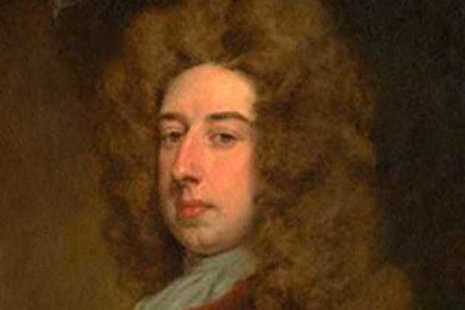
Walpole’s successor, the Earl of Wilmington served only a brief term in the highest political office, and is generally viewed as a stop-gap PM. As Spencer Compton, he was first elected MP for Eye, Suffolk in 1698, followed by East Grinstead in 1713. He served as Speaker of the House of Commons under Walpole, and as Paymaster General.
He was also Treasurer to the Prince of Wales, and expected to be rewarded by him with the position of prime minister when he acceded as George II. But Walpole outmanoeuvred him and gained the office instead.
As compensation, Spencer Compton was elevated to the House of Lords as Baron Wilmington in 1727, and later made an earl. He served as Lord Privy Seal and Lord President of the Council under Walpole, but did not oppose the 1741 censure motion against his leader.
Government at last
After the failure of King George II to put the opposition in power after Walpole’s fall in 1742, Wilmington was finally was asked to form a government.
His time in office was undistinguished. He was indecisive and a poor leader, and from his position in the House of Lords his direct influence was limited.
His brief premiership was dominated by foreign affairs. He chose to keep Britain in the War of the Austrian Succession, fighting the forces of Prussia, France and Spain.
Wilmington died in office in 1743, only a year and a half into his term.