Number 10 Downing Street

The official site of the British Prime Minister's Office

Past Prime Ministers

Duke of Newcastle

Nickname“Hubble-Bubble” in reference to his fussing and his habit of hurrying everywhere

Born 21 July 1693 , London

Died 17 November 1768, Lincoln's Inn Fields, London

Dates in office 16 March 1754 - 16 November 1756

Dates in office (Second term) 2 July 1757 - 26 May 1762

Political party Whig

Interesting facts

George II had bad relations with Newcastle and during one altercation George's poor English made Newcastle think he had challenged him to a duel. 

In 1717, Newcastle was given the responsibility of overseeing theatres and suppressing any plays or playwrights believed to be too critical of the Hanoverian succession or the Whig government. 

Newcastle was the first Prime Minister to spend his entire parliamentary career in the House of Lords, having taken his seat shortly after his 21st birthday. 


Thomas Pelham-Holles 1st Duke of Newcastle

1754 - 1756

1757 - 1762

“I shall not… think the demands of the people a rule of conduct, nor shall I ever fear to incur their resentment in the prosecution of their interest. I shall never flatter their passions to obtain their favour, or gratify their revenge for fear of their contempt.”
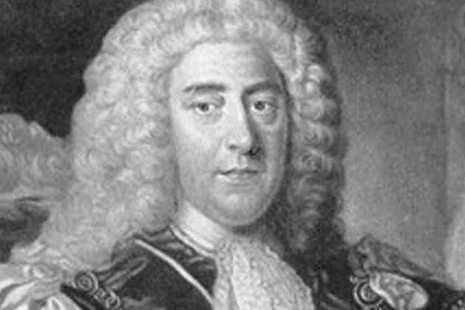
Thomas Pelham, Duke of Newcastle, is best known for leading Britain into the Seven Years War, a long military conflict with France which drained the nation and led to his own downfall.

Newcastle came from a wealthy aristocratic family with strong political leanings – his brother, Henry Pelham, was also in politics and served as prime minister after Wilmington. He was tall for the time, had a high forehead, dark grey eyes and hooked nose. It is said he was a hyperchondriac, worrying constantly about his health.

However, he was part of Walpole’s inner group from 1722, and his power grew as Walpole’s declined. He championed Britain’s entry into the war of the Austrian succession in 1741, despite Walpole’s opposition.

When Pelham died in 1754, Newcastle succeeded his brother as Prime Minister. Newcastle immediately invoked the wrath of Pitt the Elder by failing to promote him above the subordinate position he had occupied for a decade, and later sacked him altogether.

Poorly fought war

Newcastle’s first term was dominated by foreign affairs, including the Seven Years War. It was poorly fought, and early defeats led to his resignation in 1756.

Returning to office the following year, Newcastle formed a successful power-sharing coalition with Pitt.

But his influence declined from 1760 with the accession of George III, who wanted him removed. Newcastle’s final year as prime minister saw parliamentary battles over the financing of the war in Europe, leading to his resignation in 1762.

In his later years Newcastle served as Lord Privy Seal in Rockingham’s ministry, but it was a short-lived appointment. He died in November 1768.

The duke was said not to be a great man, but he was industrious and energetic, and to his credit he twice refused a pension. Records show that he finally left office £300,000 poorer than he entered it.