Number 10 Downing Street

The official site of the British Prime Minister's Office

Past Prime Ministers

Earl of Chatham

NicknameThe Great Commoner

Born 15 November 1708, Westminster, London

Died 11 May 1778, Hayes, Middlesex

Dates in office 30 July 1766 - 14 October 1768

Political party Whig

William Pitt 1st Earl of Chatham

1766 - 1768

“Unlimited power is apt to corrupt the minds of those who possess it.”
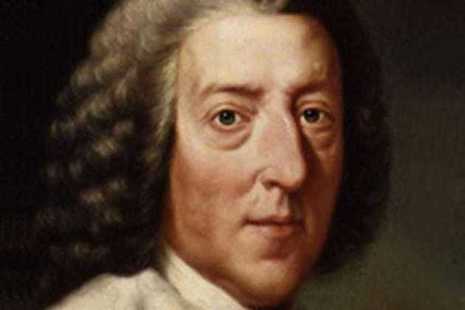
Prime minister for only two years, William Pitt ‘the Elder’ dominated British politics in the middle of the eighteenth century.  A wildly popular politician, his influence was so powerful that he effectively served as prime minister in all but name throughout the earlier premierships of Devonshire and the Earl of Newcastle.

His greatest achievements – including the beginnings of the British Empire – were made before he took the role of PM himself.

William Pitt entered the House of Commons in 1735 as the Member of Parliament for Old Sarum, and became one of the so-called ‘Boy Patriots’ who sought to bring down Sir Robert Walpole.

He was an excellent public speaker, and used his talents to launch constant attacks upon Walpole.

Noted for his commanding figure and clear, dramatic voice, he was an intimidating adversary, with unshakeable self-belief and a way with a witheringly sarcastic put-down.

Pitt’s career was defined by his refusal to toe the line, especially over matters of war and commerce, on which he had strong views. His first campaign, during Newcastle’s premiership, was his advocacy of war with, rather than the appeasement of, Spain.

He also criticised the conduct of the war, against Spain and then against France. He favoured a maritime war as tactically more astute, as well as the conquest of the French colonies.

Pitt believed the poor conduct of the war was due to the monarch’s attachment to Hanover, and to the resources and tactics being devoted to its protection.

It is said that he did not shirk from criticising the King’s interests, despite the criticism it brought him and the delay it caused in his progression to a position of power.

However, Britain’s continuing military setbacks gradually won other parliamentarians around to Pitt’s view.

The Prime Minister, Lord Newcastle, would have preferred to control Pitt by having him in the government, but the King was deeply opposed to this.

Pitt arrives as Paymaster General

However, continuing defeats saw Pitt brought in the following year, 1745, as Paymaster General – an appointment intended to neutralise him.

He married Lady Hester Grenville, sister of George Grenville, and a sympathetic, practical and stabilising influence. Pitt returned to Parliament in 1755, but his renewed attacks on military policy led to his dismissal.

But continued defeats at France’s hands appeared to support his opinions, and Newcastle’s government fell. Under the Duke of Devonshire, Pitt directed the war as Secretary of State. He used only British troops, he enlarged the Navy and he made friendly overtures towards Prussia.

In 1757 Newcastle returned as prime minister in a coalition which saw Pitt retain his position. The government was a successful one, though it saw Pitt dismissed for a period of five months before being reinstated.

During Newcastle’s premiership, Pitt made some of his greatest achievements in the area of foreign policy.

For example, he appreciated the relationship between war and trading success and chose his military campaigns to increase national trade. Conquering India, Canada, the West Indies and West Africa were all immensely beneficial to Britain’s merchants.

The birth of the Empire

For this reason, Pitt is credited with the birth of the British Empire. Such activities made him very popular with the people – he became known as the ‘Great Commoner’. He was the first minister whose main strength lay in the support of the nation at large as distinct from its representatives in the Commons, and who recognised the importance of public opinion.

In 1766, he was given the chance to form his own administration as Prime Minister, but he struggled to maintain sufficient support in the Commons. He made errors of judgement with his appointments and with his acceptance of a peerage he became the Earl of Chatham.

Pitt collapsed in the House of Lords in 1778 as his son, William Pitt the Younger, looked on, and died four days later. He whole life had been scarred by hereditary diseases and mental illness.