Past Prime Ministers
NicknameBogey
Born 25 October 1759 , Buckinghamshire
Died 12 January 1834, Buckinghamshire
Dates in office February 1806 - March 1807
Political party Whig
Major acts
Slave Trade Act 1807 - abolished the slave trade in the British Empire.
William Wyndham Grenville 1st Baron Grenville
1806 - 1807
On his resignation; “The deed is done and I am again a free man, and to you I may express what it would seem like affection to say to others, the infinite pleasure I derive from emancipation.”
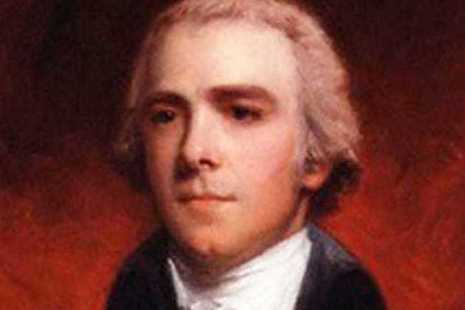
William Wyndam Grenville was the son of George Grenville, an earlier prime minister. Holding office for only a year, he shared his father’s poor public image, though he did achieve one notable achievement – the abolition of slavery.
Entering the Commons in 1782, Grenville became a close ally of Prime Minister William Pitt the Younger. He served in Pitt’s government as Home Secretary, Leader of the House of Lords as Baron Grenville, and Secretary of State for Foreign Affairs.
As Foreign Secretary, Grenville oversaw the tumultuous Wars of the French Revolution, focusing on fighting on the continent as the key to victory, rather than war at sea and in the colonies.
In 1801 Grenville left office at the same time as Pitt, over the issue of Catholic Emancipation.
In his years out of office, Grenville became close to Opposition leader Charles James Fox, and when Pitt returned to office in 1804, Grenville did not take part.
Cross-party alliance
On Pitt’s death Grenville was invited to form a government, but did so reluctantly. He formed a cross-party alliance of MPs which became known as the “Ministry of all The Talents”.
It was a coalition between Grenville’s supporters, the Foxite Whigs, and the supporters of former Prime Minister Lord Sidmouth. Grenville, as First Lord of the Treasury, and Fox, as Foreign Secretary, were joint leaders.
Grenville’s ministry was mostly unsuccessful, failing to make peace with France or to accomplish Catholic emancipation. It did, though, result in one momentous achievement – the abolition of the slave trade in 1807.
The end of his term came soon after, however, as a result of struggle over the perennial issue of Catholic emancipation. He tendered his resignation with palpable relief.
In the following years, Grenville continued in opposition maintaining his alliance with the Whigs, criticizing the Peninsular War and refusing to join Lord Liverpool’s government in 1812.
In years after the Peninsular War, Grenville gradually moved back closer to the Tories, but his political career was ended by a stroke in 1823, the start of a long period of ill-health which led to his death a decade later.